The Burj Al Arab Hotel

Well, it's not everyday that you can spend a good fine and a luxurious holiday in a grand hotel with all the quality services only a thought away. And not every hotel in the world can do that. And above all not every hotel in the world...

Sydney Opera House

Perhaps Sydney's most wonderful place is its Opera House. World renowned for its importance as a place of performing arts, Opera House's modern architecture and roofing are few among many that attract visitors....

White Immensity of Antarctica

What is so beautiful about a land completely covered by ice??? Well, beauty lies in different forms in different places. Antarctica is the ice cover we find near South Pole.

Serengeti National Park

The name “Serengeti” is from Maasai language standing for the meaning- extended place or endless plains. Most famous for its annual migration of over one and a half million white bearded.....

Great Barrier Reef

For almost 2000km long, Great Barrier Reef is the world’s largest coral reef eco system in the world. It is roughly parallel to the coast of Queensland, Australia and composed of over 2,900 individual reefs and 900 islands....

Showing posts with label Cultural monuments. Show all posts

Shwedagon Pagoda

Rising up to a height above 100m, bounded by the Singuttara Hill in Yangon is the most sacred place of Myanmar. Shwedagon Pagoda is a stupa which is covered by golden plates from top to bottom with diamonds encrusted at the top. This 2500 years old Pagoda was a creation by the king Okkalapa and the story behind the Pagoda is also a very interesting one. When Prince Siddhartha became the enlightened one and was meditating at the Rajayathana tree in the seventh week, two merchants named Thapassu and Balluka came across. They offered honey and corn. They were the first two people to follow lord Buddha and Buddhism. So in return Lord Buddha gave them 8 hair strands which they placed in a ruby casket and brought back to Asithanjana near Singuttara Hill. Back there, with the help of King Okkalapa, they built a pagoda placing inside the ruby casket with sacred hair strands as well as other relics from three other previous Buddhas, staff of Kakusandha Buddha, a piece of the robe of Kassapa Buddha and the water filter of Koṇāgamana Buddha. 
Covering the sacred relics, a golden pagoda was built and covering that a silver pagoda and a gold and copper alloy pagoda and bronze pagoda were built respectively. Encasing those and iron pagoda and finally a brick pagoda were built. It is also said that the innermost Shwedagon Pagoda was filled half with jewelry and on top of it was a ship full of jewelry and on top of it were the relics. 
Since its first construction, Pagoda was renovated and restored with several additions by many kings and queens. In 308 BC King Srimasoka built a enclosing pavilion while around 1360, King Banya-U enlarged the pagoda. Queen Shinsawbu made a retaining embankment with brick along with an enclosure wall. King Dhammazedi gifted gold that matched the weight of himself and his wife for the gliding of the pagoda and placed a huge bell on it. Anaukpetlun donated an umbrella and a bell and he reconstructed the pagoda which was damaged due to an earthquake. Hsinbyushin restored the pagoda to present day height and gave away an umbrella and 77kg of gold for the gliding. 
If we look at the basic plan of the site, making Shwedagon Pagoda the center piece, there are 4 smaller stupas at the four cardinal directions. Encircling the main stupa, there are 64 small stupas inline with the cardinal stupas. Main stupa can again be divied into 3 parts as the base, dome and the spire. The base of the stupa consists of a square plinth of 6.4m high, octagonal terraces and an octagonal dais called "eight edges". Dome consists of circular bolts, the bell, the girdle, the inverted alms bowl and the festoon. The spire is again divided into four parts. The lowest part has 7 concentric rings. Above them are the upturned lotus and the inverted lotus. Above them is a tear drop shaped structure. Finally at the top it the umbrella. 


Travellers' Guide
If you are planning to visit Shwedagon Pagoda, there are several formalities you should follow. Make sure you wear your bottoms covering your knees and your tops should have sleeves at least up to elbow length. You must remove your shoes and slippers at the entrance. An entrance fee of $5 will be charged. There are food and concession services if you want. Usually the Pagoda is open daily from 4 am to 10 pm and on the waxing day of Tabaung around March and waxing day of Wakhaung around June the pagoda is open 24 hours. 
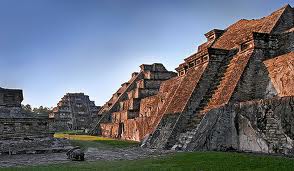
El Tajin

One of the proud beauties of Mexico, El Tajin in Veracruz can be recognized as an ancient city from 600 to 1230 CE, believed to existed in the Mesoamerica. The city today shows only remains of once well advanced civilization which must have been completed with temples, palaces, pyramids etc. El Tajin gives the meaning lightening and thundering ad perhaps that is why they still believe that their deities of twelve old thunderstorm still inhabits the ruins. Also there is archaeological evidence that long before its rediscovery in 1785, the city was called Mictlan meaning the place of the dead.

The peak time of the city must have been since 600 CE basically after the fall of Teotihuacan. It was abolished by a fire believed to be the work of the invading force known as Chichimecas. Then it was left to be in ruins covered by the forest until it was rediscovered by Diego Ruiz, who was in search of clandestine tobacco plantations. He accidentally walked across the ruins of Pyramid of niches. He drew it and when he came back sent it to publication which took by surprise as well as appreciation. They believed the indigenous people of the area must have kept the ruins as a secret in order to protect it.

Besides being ruins at large, the ancient city has great architectural values. Ever since its discovery, many including German architect Charles Nebel, archaeologists Teobert Maler, Edward Seler, Francisco del Paso y Troncoso and Herbert and Ellen Spinden visited the site.

Now a days, El Tajin has become a major money spinner as it attracts more and more tourists each and every year. There have been some modifications done in order to facilitate the large crowd including the cafeteria and info centre. One has to enter the ruins from its southern end entrance. The site contains a park named as Parque Takilhsukut where it is used to hold festivals, workshops etc. Another new addition is the museum. The places you will be able to see in the site are Arroyo Group, The Pyramid of the Niches, Tajin Chico, Great Xicalcoluihqui, Blue Temple, the North and South Ball Courts etc.

Travellers' Guide
If you are planning to visit El Tajin, the site can be located near the cities Poza Rica and Papantla in the state of Veracruz, Mexico. You can find accommodation in Veracruz.

Hotel Lois
Calzada Ruiz Cortines 10, 94294 Veracruz
City Junior Veracruz
Calzada Manuel de Jesús Clouthier No 2641, 91725 Veracruz
Gran Hotel Diligencias
1115 Independence Avenue, Zona Centro, 91700 Veracruz
Holiday Inn Veracruz-Centro Historico
Calle Morelos 225, Colonia Centro, 91700 Veracruz
Camino Real Veracruz
Boulevard Manuel Avila Camacho, 3650 , 94299 Veracruz
Emporio Veracruz
Paseo del Malecón 244, 91700 Veracruz
Hotel Gran Via
Salvador Diaz Miron, 1572, 91910 Veracruz


Temple of Tooth Relic Kandy

You may want to recall your memories about the famous Esala Perahera. Esala Perahera is held in order to show case the famous and sacred tooth relic of Lord Buddha. Located at the popular city Kandy in the Central Province of Sri Lanka, Temple of Tooth Relic is visited by thousands of travelers, visitors, devotees and explorers everyday. The Temple complex includes Temple of the Tooth building complex, Mahawahalkada (The main entrance), Moat, Pattirippuwa (Octagon), Handun kunama, Golden canopy, New Palace, Royal Palace of Kandy, National Museum of Kandy, Old courts building, Kandy Lake, Biso ulpen ge (Queens bath), Diyathilaka mandapaya and Udawatta Kele Sanctuary. 
The tooth relic is important in many ways to the Sri Lankans. Temple of the Tooth Relic is the major Buddhist temple in Sri Lanka. Since the very ancient times, it has been a tradition that to become the ruler of the country, the candidate has to have the tooth relic. This shows that tooth relic is important not only religious wise but also politically too. 
What is this Tooth relic actually??? When Lord Buddha was cremated, his four canine teeth were taken from the ashes and distributed all over the world to the countries who sought them. It is famously said that one of the tooth relics is located in Gandhara or modern-day Pakistan, another is with king of the gods; Sakra and another is with Nagas and the last one, the left canine was with the King of Kalinga in India. This tooth relic was worshipedby many and shown great respect earned many enemies from other religions and other countries and finally Guhasiva, the Kalinga king who ruled in 4th century AD  had to sent it to a safer place in order to protect it. 
Sri Lanka was chosen as the next home for the tooth relic because Sri Lanka was a Buddhist country at that time and many Sri Lankan rulers maintained connections with the Indian rulers. So the king sent the tooth relic with two guardians Princess Hema Mala and Price Dhantha. They handed over the tooth relic to King Kirti Sri Meghavanna who was the ruler of Anuradhapura kingdom at that time and he placed it in a special palace. After his reign, the tooth relic was kept at Abhayagiri Vihara in northern Anuradhapura and then in Atadage in the Sacred Quadrangle in Polonnaruwa. During king Nissankamalla's reign, he built the Relic Shrine Hatadage and at times of great miseries, the tooth relic was safe kept in Kotmale. 
King Vijayabahu II enshrined the relic on the hill top of Beligala and after that King Parakramabahu II placed it near his palace at Damabadeniya. King Bhuvanekabahu also built a shrine for the tooth relic in Yapahuwa  and Mulgirigala Vihara, Ridivihara in the Kurunegala and  Delgamuva Vihara are last temples where the tooth relic was safe kept before bringing it to Kandy. 
King Vimaladharmasuriya I was the ruler in Kandy who built the present day complex in 1595 to place the tooth relic. During and after his time, the Portuguese who came to Sri Lanka became such a menace that they disturbed the rituals and festivities held to honour the tooth relic. 
The tooth relic is regarded as royalty and there are Buddhist monks responsible for the Temple of the tooth relic. They are Mahanayaka Thera of Asgiriya and Mahanayaka Thera of Malwatta and also Diyawadana Nilame is the safe keeper of the tooth relic. In 1987, a golden canopy was built over the main shrine. The tooth relic rests in a golden casket of the shape of a stupa in this main shrine. 

Travellers' Guide
If you are planning to visit the temple of the tooth relic, you can reach Kandy straight away from Bandaranayake International Air Port by Tour buses, Taxies, or even trains from Fort Station. Kandy city has many other temples and beautiful scenic views you can enjoy such as the Bogambara Lake drive. There are plenty of hotels and restaurants in the city too like the Queen's Hotel, Dalada Mw, Kandy View Hotel and Chaaya Citadel. You can do some festival shopping at Kandy City Centre. 


Sydney Opera House

Perhaps Sydney's most wonderful place is its Opera House. World renowned for its importance as a place of performing arts, Opera House's modern architecture and roofing are few among many that attract visitors to it everyday. Opera House which is located at the Bennelong Point in Sydney Harbour, is a creation by the Danish architect Jørn Utzon for which he received the Pritzker Prize; the highest honour awarded for an architect. On 20th October, 1973 this master piece was open for public and today it is a world heritage site. The structure rises up to a height of 65m, it is 183m long, 120m wide and it covers an area of 4.4 acres. 

Sydney Opera House falls into the design category Expressionist design and it depicts qualities of late modern architecture. What amazes us most it the distinct roofing with sets of interlocking vaulted shells upon a vast terraced platform and surrounded by terrace areas that function as pedestrian concourses. Towards the western end of the complex is the Concert Hall and in vice versa is the Opera Theatre. There are also the Drama Theatre, the Playhouse, and The Studio which are actually found beneath the Concert Hall. Towards the western part of the Monumental Steps is the Bennelong Restaurant. 

The House has an immense capacity. Its Concert Hall has 2679 seats and is home for the Sydney Symphony Orchestra. Another importance we find here is the Sydney Opera House Grand Organ which can be recognized as the world's largest mechanical tracker action organ. On the other hand, the Opera Theatre has 1507 seats and houses the Opera Australia and The Australian Ballet. The Drama Theatre has 544 seats, the Playhouse has an end stage with 398 seats and the Studio has a max. capacity of 400. There is also a small multipurpose room named the Utzon Room which can accommodate up to 210. The Forecourt is used as a open air performing space. So in total it has about 5738 seats in the place.

The first ever piano recital was by Romola Costantino in the Concert Hall in 1973. Sergei Prokofiev's War and Peace is the first Opera in the theatre. Sydney Symphony Orchestra, conducted by Charles Mackerras performed the first public concert of the Opera House on 28th September, 1973. 

Travellers' Guide
If you are planning to visit the Sydney Opera House, there are various tours arranged by the Opera House. Each tour will last about one hour,  you can select the language guide you want from English, German, French, Japanese etc. The package touring may include dining experiences and accommodation. For more details on tour plans you can visit the official website.

Sagrada Família

Sagrada Família is a Roman Catholic church found in Barcelona, Catalonia, Spain designed by Catalan architect Antoni Gaudí and still unfinished. The original inspiration for the church is by the Catalan bookseller, Josep Maria Bocabella. After that architect Antoni Gaudí began working on the project in 1883. On 18 March 1883, Villar retired from the project, and Gaudí took over the design adding so many changes to it. The construction period was so long and it could not be finished fully when Gaudi died in 1926. After his death, responsibility for the church construction came under Domènec Sugrañes i Gras until interrupted by the Spanish Civil War in 1936.Some parts were destroyed by Catalan anarchists and the present design is a mixture of modern and old. Modern technology was involved to accelerate the construction process.

Sagrada Familia shows the design mixture of Spanish Late Gothic, Catalan Modernism and Art Nouveau or Catalan Noucentisme. Although initially it was planned to be a cathedral sized building, later it became one as it depicts various parts of usual cathedrals with vast modifications, for example like the ground plan, double isles, an ambulatory with a chevet of seven apsidal chapels, a multitude of towers and three portals. The building consists of three grand façades: the Nativity façade to the East, the Passion façade to the West, and the Glory façade to the South which is yet to be finished. 

Nativity façade was the first façade to be completed which was built between 1894 and 1930. It is also decorated with scenes reminiscent of elements of life. Passion Façade is seen as a contrast to the earlier in other words more simple and plain. This is dedicated to the passion of Christ, suffering of Jesus during his crucifixion, and the façade was to portray the sins of man. The largest and most beautiful of all is the Glory Façade whose construction began in 2002. This is dedicated to the Celestial Glory of Jesus; it represents the road to God: Death, Final Judgment, and Glory, while Hell is left for those who deviate from God's will.

 As earlier mentioned, Gaudi made drastic changes in the original plan so that basically the church will be able to accommodate 13,000 people and the completed structure will have 18 towers. Four on each three facades is to represent the 12 apostles while another four is to represent the the 4 evangelists. They will surround the largest which will be dedicated to Jesus Christ and the last tower is for Virgin Mary, which will be built over the apse. 

Travellers’ Guide
If you are planning to visit Sagrada Familia, don’t hesitate thinking that it’s yet to be finished. Sagrada Familia is full of fascination. You can visit the crypt where Gaudí is buried and the towers.

Hotels near Sagrada Familia
Castro Exclusive Residences
Provenza, 414, Eixample, Barcelona (0.1 km from Sagrada Familia)
Apartaments Restaurant Hispanos 7 Suiza
Sicilia, 255, Eixample, Barcelona (0.2 km from Sagrada Familia)
Apartments Hostemplo Suites
Mallorca, 362, Eixample, Barcelona(0.2 km from Sagrada Familia)
Dailyflats Rosselló
Rosselló, 380-382, Eixample, Barcelona(0.3 km from Sagrada Familia)
Ayre Hotel Rosellón 
Roselló, 390, Eixample, Barcelona (0.3 km from Sagrada Familia)

Neuschwanstein Castle

Situated above the village of Hohenschwangau near Füssen in southwest Bavaria of Germany is this beautiful castle. Originally twin in ruins though, the new palace was built as a commission for Richard Wagner by Ludwig II of Bavaria.  Ludwig used to call the new palace he built as New Hohenschwangau Castle but after his death it was named as Neuschwanstein. Inspiration for the construction of this castle was found from Wartburg near Eisenach and Château de Pierrefonds. However the design of the building was by the stage designer Christian Jank and realized by the architect Eduard Riedel. As typical the palace may seem for the 19th century architecture, shapes of Romanesque, Gothic and the Throne Hall décor were mingled with 19th century technical achievements. 

Karnak

The Karnak Temple Complex is located near Luxor, some 500 km south of Cairo, in Egypt which is mainly made of temples, chapels, pylons, and other buildings. Karnak was the ancient Egyptian Ipet-isut. This can be seen as the world’s largest ancient religious site. It consists of four main parts as Precinct of Amun-Re, Precinct of Mut, the Precinct of Montu, and the dismantled Temple of Amenhotep IV. There also are a few smaller temples and sanctuaries located outside the enclosing walls of the four main parts, as well as several avenues of goddess and ram-headed sphinxes connecting the Precinct of Mut, the Precinct of Amun-Re, and the Luxor Temple.

Louvre Museum

Located on the right bank of the Seine, Louvre Museum is one of the world’s largest museums with nearly 35, 000 objects in display over 60,600 square metres. Museum is located at the Louvre Palace built in the late 12th century under Philip II. It was officially opened on 10 August 1793 with an exhibition of 537 paintings. But it was closed again in 1796 because of structural problems but was opened again in 1801. The museum’s artifacts are divided into eight curatorial departments as Egyptian Antiquities; Near Eastern Antiquities; Greek, Etruscan, and Roman Antiquities; Islamic Art; Sculpture; Decorative Arts; Paintings; Prints and Drawings.

Alhambra

Lying on the top of the hill of the Assabica on the southeastern border of the city of Granada, Andalusia in Spain is the Alhambra; a palace complex built around mid 14th century. Alhambra reflects Moorish culture and architecture to a great extent and Alhambra reflects the colour of the red clay of the surroundings but originally it was white washed. Also evidence from Arab texts also indicates that the fortress that is seen today was built during the Nasrid Dynasty. 

Ganges at Varanasi

Ganges is the India’s most worshipped river with many religious aspects and Varanasi is well famous for Ganges and its activities and is one of the holiest cities in India. Earlier known as Banaras, Varanasi is found within Uttar Pradesh and it is truly a feast for visitors with warm welcoming citizens and heartfelt ceremonies and rich cultures woven around Ganges. 

Hassan II Mosque

The Hassan II Mosque can be taken as the largest mosque in the country, Casablanca, Morocco and the 7th largest mosque in the world. Its minaret is however the world's tallest at 210 m. This Mosque, which is a religious building is a design the French architect Michel Pinseau and a creation by Bouygues. The Mosque stands in a way like looking out to the Atlantic. The Mosque is so huge so that it can accommodate almost 105,000 worshippers for prayers and around 25,000 inside the mosque and another 80,000 on the mosque's ground outside.

Acropolis of Athens

Also Known as the Citadel of Athens, this is so far world’s best acropolis and it is significant because it is an acropolis without a qualification. The Acropolis rises 150 m above sea level in the city of Athens as a flat-topped rock with a surface area of about 3 hectares. It was also known as Cecropia, after the legendary serpent man Cecrops, the first Athenian king. The Propylaea is known as the entrance to the Acropolis and to the south of the entrance is the tiny Temple of Athena Nike. A bronze statue of Athena, sculpted by Phidias, originally stood at its centre. At the centre of the Acropolis is the Parthenon or Temple of Athena Parthenos. East of the entrance and north of the Parthenon is the temple known as the Erechtheum. South of the platform that forms the top of the Acropolis there are also the remains of an outdoor theatre called Theatre of Dionysus. A few hundred metres away, there is the now partially reconstructed Theatre of Herodes Atticus.

Palace of Versailles

20km southwest of Paris is the beautiful country side of France;Versailles which is enchantingly famous for the castle of King Louis XIV known as Palace of Versailles. The first ever seigneur of Versailles mentioned was Hugues de Versailles and then in 1575, Albert de Gondi bought the Versailles. Gondi had invited King Louis XIII for hunting trips near Versailles during early 17th century which resulted in construction of a hunting lodge in 1624 as the king was pleased. After few years later King Louis XII gained the ownership of Versailles his son, Louis XIV became familiar with the place since he was a boy.  When Louis XIV became king, he renovated the château in Versailles which was the hunting lodge earlier into one of the biggest castles in the world. Its constructions and renovations began in 1661 using the master minds of architect Louis Le Vau, landscape architect André Le Nôtre, and painter-decorator Charles Le Brun. King Louis XIV moved the capital of France to this castle at Versailles from Paris and officially settled down there on 6 May, 1682.

Sistine Chapel

   Found in Apostolic Palace, Sistine Chapel is the official residence of the Pope in Vatican City. Veteran artists like Michelangelo, Sandro Botticelli, Pietro Perugino, Pinturicchio have drawn frescoes in this chapel where it is well known for architecture and decorations. Under the patronage of Pope Julius II, Michelangelo painted 1,100 m2 (12,000 sq ft) of the chapel ceiling between 1508 and 1512. The painting drawn in the ceiling; The Last Judgment (1535-1541) is supposed to be Michelangelo’s crowning achievement in painting. The chapel’s name is from Pope Sixtus IV who restored the old Capella Magna in 1477-1480. The paintings were completed in 1482, and on the 15 August 1483, Sixtus IV celebrated the first mass in the Sistine Chapel for the Feast of the Assumption, at which ceremony the chapel was consecrated and dedicated to the Virgin Mary.
The main function of the chapel could be denoted as the venue for the election of each successive pope in a conclave of the College of Cardinals. On the occasion of a conclave, a chimney is installed in the roof of the chapel, from which smoke arises as a signal. If white smoke appears, created by burning the ballots of the election, a new Pope has been elected. If a candidate receives less than a two-thirds majority, the cardinals send up black smoke which means that no successful election has yet occurred. The conclave also provided for the cardinals a space in which they can hear mass, and in which they can eat, sleep, and pass time abetted by servants. Canopies for each cardinal-elector were once used during conclaves as a sign of equal dignity. When a new pope is being elected, he gives his new name and at this, the other Cardinals would tug on a rope attached to their seats to lower their canopies.

Colosseum


     This is an amphitheatre which is also known as Amphitheatrum Flavium, built in the center of the city Rome, Italy shaping in an ellipse. It is also the largest ever built in Roman Empire. Its construction began in 72 AD under the emperor Vespasian and was completed in 80 AD under Titus, with further modifications being made during Domitian's reign. Colosseum accommodates seating for 50,000 spectators which was basically used for  gladiatorial contests and public events such as mock sea battles, animal hunts, executions, re-enactments of famous battles, and dramas based on Classical mythology. The building ceased to be used for entertainment in the early medieval era. It was later reused for such purposes as housing, workshops, and quarters for a religious order, a fortress, a quarry, and a Christian shrine.
It has been long believed that the name Colosseum was from a colossal statue of Nero nearby. This statue was later remodeled by Nero's successors into the likeness of Helios or Apollo, the sun god, by adding the appropriate solar crown. Nero's head was also replaced several times with the heads of succeeding emperors. Despite its pagan links, the statue remained standing well into the medieval era and was credited with magical powers. It came to be seen as an iconic symbol of the permanence of Rome. In the 8th century, a famous epigram attributed to the Venerable Bede celebrated the symbolic significance of the statue in a prophecy "as long as the Colossus stands, so shall Rome; when the Colossus falls, Rome shall fall; when Rome falls, so falls the world.” This is often mistranslated to refer to the Colosseum rather than the Colossus. The Colossus did eventually fall, possibly being pulled down to reuse its bronze.

Cathedral–Mosque of Córdoba


Located in the Andalusian city of Córdoba, Spain, is the former Great Mosque of Córdoba or the Catedral de Nuestra Señora de la Asunción which in English means the Cathedral of Our Lady of the Assumption. Before the Umayyad Moors converted the building into a mosque and then built a new mosque here, it was originally a pagan temple and then a Visigothic Christian church. After the Spanish Reconquista, it once again became a Roman Catholic Church, with a plateresque cathedral later inserted into the centre of the large Moorish building. The Mezquita is regarded as the one of the most accomplished monuments of Islamic architecture. 
The building was begun around the year 600 as the Christian Visigothic church of St. Vincent. After the Islamic conquest of the Visigothic kingdom, the church was divided between the Muslims and Christians. When the exiled Umayyad prince Abd ar-Rahman I escaped to Spain and defeated the Andalusian governor Yusuf al-Fihri, he allowed the Christians to rebuild their ruined churches, and purchased the Christian half of the church of St. Vincent. Abd ar-Rahman I and his descendants reworked it over two centuries to refashion it as a mosque, starting in 784. Additionally, Abd ar-Rahman I used the mosque as an adjunct to his palace and named it to honor his wife. Traditionally, the mihrab of a mosque faces in the direction of Mecca; by facing the mihrab, worshipers pray towards Mecca. Mecca is in east which means southeast of the mosque, but the mihrab points south. 

Moai


Monolithic human figures carved from rock on the Polynesian island of Easter Island together are called Moai. They were carved between the years 1250 and 1500. There are still half of the originals at Rano Raraku, the main moai quarry, but hundreds were transported from there and set on stone platforms called ahu around the island's perimeter. Almost all moai have overly large heads three-fifths the size of their bodies. The moai are chiefly the living faces (aringa ora) of deified ancestors. Altogether it is believed that there are 887 statues whose production and transportation is considered a remarkable creative and physical feat. The tallest moai erected, called Paro, was about 10 metres (33 ft) high and weighed 82 tons; the heaviest erected was a shorter but squatter moai at Ahu Tongariki, weighing 86 tons; and one unfinished sculpture, if completed, would have been approximately 21 metres (69 ft) tall with a weight of about 270 tons.
It is believed that these statues were carved by the Polynesian colonizers of the island. In addition to representing deceased ancestors, the moai, once they were erected on ahu, may also have been regarded as the embodiment of powerful living or former chiefs and important lineage status symbols. Completed statues were moved to ahu mostly on the coast, and then erected, sometimes with red stone cylinders (pukao) on their heads. Moai must have been extremely expensive to craft and transport; not only would the actual carving of each statue require effort and resources, but the finished product was then hauled to its final location and erected. The quarries in Rano Raraku appear to have been abandoned abruptly, with their working tools everywhere. In the nineteenth century, this led to a theory that the island was the remnant of a sunken continent and that most completed moai were under the sea. That idea has long been debunked but now it is thoroughly understood because, some statues were rock carvings and never intended to be completed and some were incomplete because, when inclusions were encountered, the carvers would abandon a partial statue and start a new one. 

Hagia Sophia


It is a former mosque and now a museum found in Istanbul, Turkey which served as the Greek Patriarchal cathedral of Constantinople, except between 1204 and 1261, when it was converted to a Roman Catholic cathedral under the Latin Patriarch of Constantinople of the Western Crusader established Latin Empire. The building was a mosque from 29 May 1453 until 1931, when it was secularized. It was opened as a museum on 1 February 1935. The Church was dedicated to the Logos, the second person of the Holy Trinity, its dedication feast taking place on 25 December, the anniversary of the Birth of the incarnation of the Logos in Christ. 
Incredibly famous for its massive dome, it is considered the epitome of Byzantine architecture and is said to have "changed the history of architecture." It was the largest cathedral in the world for nearly a thousand years, until Seville Cathedral was completed in 1520. The current building was originally constructed as a church between 532 and 537 on the orders of the Byzantine Emperor Justinian and was the third Church of the Holy Wisdom to occupy the site, the previous two having both been destroyed by rioters. It was designed by the Greek scientists Isidore of Miletus, a physicist, and Anthemius of Tralles, a mathematician. It also contains a large collection of holy relics. 

Angkor City


Being the largest preindustrial city in the world, with an elaborate system of infrastructure connecting an urban sprawl of at least 1,000 square kilometres (390 sq mi) to the well-known temples at its core, Angkor city in Cambodia served as the Khmer Empire from 9th to 15th centuries. The temples of the Angkor area number over one thousand, ranging in scale from nondescript piles of brick rubble scattered through rice fields to the magnificent Angkor Wat, said to be the world's largest single religious monument. Many of the temples at Angkor have been restored, and together, they comprise the most significant site of Khmer architecture.
The Angkorian period began in AD 802, when the Khmer Hindu monarch Jayavarman II declared himself a "universal monarch" and "god-king", until 1351, when Angkor first fell under Ayutthayan suzainry, to 1431, when Ayutthaya put down a rebellion and sacked the Khmer capital, causing its population to migrate south to the area of Phnom Penh. In 889, Yasovarman took over the throne who was a great ruler. He built a new city known as Yasodharapura and a new reservoir called Baray.  
Over the next 300 years, between 900 and 1200, the Khmer Empire produced some of the world's most magnificent architectural masterpieces in the area known as Angkor. Most are concentrated in an area approximately 15 miles (24 km) east to west and 5 miles (8.0 km) north to south, although the Angkor Archaeological Park, which administers the area, includes sites as far away as Kbal Spean, about 30 miles (48 km) to the north. Some 72 major temples or other buildings are found within this area, and the remains of several hundred additional minor temple sites are scattered throughout the landscape beyond. Because of the dispersed, low-density nature of the medieval Khmer settlement pattern, Angkor lacks a formal boundary, and its extent is therefore difficult to determine. However, a specific area of at least 1,000 km2 (390 sq mi) beyond the major temples is defined by a complex system of infrastructure, including roads and canals that indicate a high degree of connectivity and functional integration with the urban core. In terms of spatial extent, this makes it the largest urban agglomeration in human history prior to the Industrial Revolution, easily surpassing the nearest claim, that of the Mayan city of Tikal. In fact, in terms of its urban sprawl, medieval Angkor even approaches the size of modern Los Angeles, and is said to have been seventeen times larger than Manhattan Island. 

Eiffel Tower


Once the tallest structure in the world, Eiffel Tower has been the iconic symbol for Paris and to the France.  It was built in 1889 as a puddle iron lattice tower standing magnificently above all. The tower is the tallest building in Paris and the most-visited paid monument in the world; millions of people ascend it every year. Named after its designer, engineer Gustave Eiffel, the tower was built as the entrance arch to the 1889 World's Fair. The tower stands 324 metres (1,063 ft) tall, about the same height as an 81-storey building. The tower has three levels for visitors. Tickets can be purchased to ascend, by stairs or lift, to the first and second levels. The walk from ground level to the first level is over 300 steps, as is the walk from the first to the second level. The third and highest level is accessible only by elevator. Both the first and second levels feature restaurants.
Three hundred workers joined together 18,038 pieces of puddle iron (a very pure form of structural iron), using two and a half million rivets, in a structural design by Maurice Koechlin. Eiffel was assisted in the design by engineers Émile Nouguier and Maurice Koechlin and architect Stephen Sauvestre. The risk of accident was great as, unlike modern skyscrapers, the tower is an open frame without any intermediate floors except the two platforms. However, because Eiffel took safety precautions, including the use of movable stagings, guard-rails and screens, only one man died. The tower was inaugurated on 31 March 1889, and opened on 6 May. Eiffel had a permit for the tower to stand for 20 years; it was to be dismantled in 1909, when its ownership would revert to the City of Paris. The City had planned to tear it down (part of the original contest rules for designing a tower was that it could be easily demolished) but as the tower proved valuable for communication purposes, it was allowed to remain after the expiry of the permit. The military used it to dispatch Parisian taxis to the front line during the First Battle of the Marne.
The pig iron structure of the Eiffel Tower weighs 7,300 tonnes while the entire structure, including non-metal components, is approximately 10,000 tonnes. As a demonstration of the economy of design, if the 7,300 tonnes of the metal structure were melted down it would fill the 125 metre square base to a depth of only 6 cm (2.36 in), assuming the density of the metal to be 7.8 tonnes per cubic metre. Depending on the ambient temperature, the top of the tower may shift away from the sun by up to 18 cm (7.1 in) because of thermal expansion of the metal on the side facing the sun. Researchers have found that Eiffel used empirical and graphical methods accounting for the effects of wind rather than a specific mathematical formula. Careful examination of the tower shows a basically exponential shape; actually two different exponentials, the lower section overdesigned to ensure resistance to wind forces. Several mathematical explanations have been proposed over the years for the success of the design; the most recent is described as a nonlinear integral equation based on counterbalancing the wind pressure on any point on the tower with the tension between the construction elements at that point. As a demonstration of the tower's effectiveness in wind resistance, it sways only 6–7 cm (2–3 in) in the wind.