The Burj Al Arab Hotel

Well, it's not everyday that you can spend a good fine and a luxurious holiday in a grand hotel with all the quality services only a thought away. And not every hotel in the world can do that. And above all not every hotel in the world...

Sydney Opera House

Perhaps Sydney's most wonderful place is its Opera House. World renowned for its importance as a place of performing arts, Opera House's modern architecture and roofing are few among many that attract visitors....

White Immensity of Antarctica

What is so beautiful about a land completely covered by ice??? Well, beauty lies in different forms in different places. Antarctica is the ice cover we find near South Pole.

Serengeti National Park

The name “Serengeti” is from Maasai language standing for the meaning- extended place or endless plains. Most famous for its annual migration of over one and a half million white bearded.....

Great Barrier Reef

For almost 2000km long, Great Barrier Reef is the world’s largest coral reef eco system in the world. It is roughly parallel to the coast of Queensland, Australia and composed of over 2,900 individual reefs and 900 islands....

Showing posts with label Mexico. Show all posts

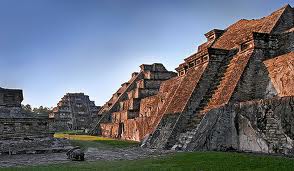
El Tajin

One of the proud beauties of Mexico, El Tajin in Veracruz can be recognized as an ancient city from 600 to 1230 CE, believed to existed in the Mesoamerica. The city today shows only remains of once well advanced civilization which must have been completed with temples, palaces, pyramids etc. El Tajin gives the meaning lightening and thundering ad perhaps that is why they still believe that their deities of twelve old thunderstorm still inhabits the ruins. Also there is archaeological evidence that long before its rediscovery in 1785, the city was called Mictlan meaning the place of the dead.

The peak time of the city must have been since 600 CE basically after the fall of Teotihuacan. It was abolished by a fire believed to be the work of the invading force known as Chichimecas. Then it was left to be in ruins covered by the forest until it was rediscovered by Diego Ruiz, who was in search of clandestine tobacco plantations. He accidentally walked across the ruins of Pyramid of niches. He drew it and when he came back sent it to publication which took by surprise as well as appreciation. They believed the indigenous people of the area must have kept the ruins as a secret in order to protect it.

Besides being ruins at large, the ancient city has great architectural values. Ever since its discovery, many including German architect Charles Nebel, archaeologists Teobert Maler, Edward Seler, Francisco del Paso y Troncoso and Herbert and Ellen Spinden visited the site.

Now a days, El Tajin has become a major money spinner as it attracts more and more tourists each and every year. There have been some modifications done in order to facilitate the large crowd including the cafeteria and info centre. One has to enter the ruins from its southern end entrance. The site contains a park named as Parque Takilhsukut where it is used to hold festivals, workshops etc. Another new addition is the museum. The places you will be able to see in the site are Arroyo Group, The Pyramid of the Niches, Tajin Chico, Great Xicalcoluihqui, Blue Temple, the North and South Ball Courts etc.

Travellers' Guide
If you are planning to visit El Tajin, the site can be located near the cities Poza Rica and Papantla in the state of Veracruz, Mexico. You can find accommodation in Veracruz.

Hotel Lois
Calzada Ruiz Cortines 10, 94294 Veracruz
City Junior Veracruz
Calzada Manuel de JesĂşs Clouthier No 2641, 91725 Veracruz
Gran Hotel Diligencias
1115 Independence Avenue, Zona Centro, 91700 Veracruz
Holiday Inn Veracruz-Centro Historico
Calle Morelos 225, Colonia Centro, 91700 Veracruz
Camino Real Veracruz
Boulevard Manuel Avila Camacho, 3650 , 94299 Veracruz
Emporio Veracruz
Paseo del MalecĂłn 244, 91700 Veracruz
Hotel Gran Via
Salvador Diaz Miron, 1572, 91910 Veracruz


Carlsbad Caverns National Park

 It is a United States National Park in the Guadalupe Mountains in southeastern New Mexico. The park consist of the show cave, Carlsbad Caverns where people who come to visit the cave can hike in on their own via the natural entrance, or take the elevator (the exit for everyone) directly to the Underground Lunchroom some 750 feet (230 m) below. The park has two entries on the National Register of Historic Places: The Caverns Historic District and the Rattlesnake Springs Historic District. Approximately two thirds of the park has been set aside as a wilderness area, helping to ensure no future changes will be made to the habitat. Carlsbad Caverns consist of a large cave chamber, the Big Room, a natural limestone chamber which is almost 4,000 feet (1,220 m) long, 625 feet (191 m) wide, and 350 feet (110 m) high at the highest point. It is the third largest chamber in North America and the seventh largest in the world. The largest in the world is the Sarawak Chamber in Malaysia.
From a young age, Jim White explored the caverns with his homemade wire ladder. When he grew older, most people did not even believe such caves existed. He gave many of the rooms their names, including the Big Room, New Mexico Room, King's Palace, Queen's Chamber, Papoose Room, and Green Lake Room. He also named many of the cave's more prominent formations, such as the Totem Pole, Witch's Finger, Giant Dome, Bottomless Pit, Fairyland, Iceberg Rock, Temple of the Sun, and Rock of Ages.
The town of Carlsbad, which lends its name to the Caverns and National Park, is in turn named after the Czech town formerly known by the German name Karlsbad and now known by the Czech name Karlovy Vary, both of which mean "Charles' Bath." Until 1932, visitors to the cavern had to walk down a switch back ramp-sidewalk that took them 750 feet below the surface. The walk back up was hard on a lot of visitors. In 1932 the National Park opened up a large visitor center building that contained two elevators that would take visitors to the caverns below. The new center included a cafeteria, waiting room, museum and first aid area. 

Teotihuacan

 Teotihuacan stands for "The City of the Gods" in the Nahuatl language of the Aztecs. It is an archeological site found in the basin of Mexico containing large pyramidal structures, large residential complexes, Avenue of the Dead, and numerous colorful, well-preserved murals. Additionally, Teotihuacan produced a thin orange pottery style that spread through Mesoamerica.  At its zenith, perhaps in the first half of the 1st millennium CE, Teotihuacan was the largest city in the pre-Columbian Americas. At this time it may have had more than 200,000 inhabitants, placing it among the largest cities of the world in this period. Teotihuacan was even home to multi-floor apartment compounds built to accommodate this large population. The civilization and cultural complex associated with the site is also referred to as Teotihuacan or Teotihuacano.
The city and the archaeological site are located in what is now the San Juan Teotihuacán municipality in the State of MĂ©xico, Mexico, approximately 40 kilometres (25 mi) northeast of Mexico City. The site covers a total surface area of 83 km² and was designated a UNESCO World Heritage Site in 1987. It is the most visited archaeological site in Mexico.
For many years, archaeologists believed it was built by the Toltec. This belief was based on colonial period texts, such as the Florentine Codex, which attributed the site to the Toltecs. However, the Nahuatl word "Toltec" generally means "craftsman of the highest level" and may not always refer to the Toltec civilization centered at Tula, Hidalgo. Since Toltec civilization flourished centuries after Teotihuacan, the people could not have been the city's founders. In the Late Formative period, a number of urban centers arose in central Mexico. The most prominent of these appears to have been Cuicuilco, on the southern shore of Lake Texcoco. Some believed that the eruption of the Xitle volcano may have prompted a mass emigration out of the central valley and into the Teotihuacan valley. These settlers may have founded and/or accelerated the growth of Teotihuacan. Some have put forth the Totonac people as the founders of Teotihuacan. There is evidence that at least some of the people living in Teotihuacan came from areas influenced by the Teotihuacano civilization, including the Zapotec, Mixtec and Maya peoples. The culture and architecture of Teotihuacan was influenced by the Olmec people, who are considered to be the "mother civilization" of Mesoamerica. The earliest buildings at Teotihuacan date to about 200 BCE. The largest pyramid, the Pyramid of the Sun, was completed by 100 CE.